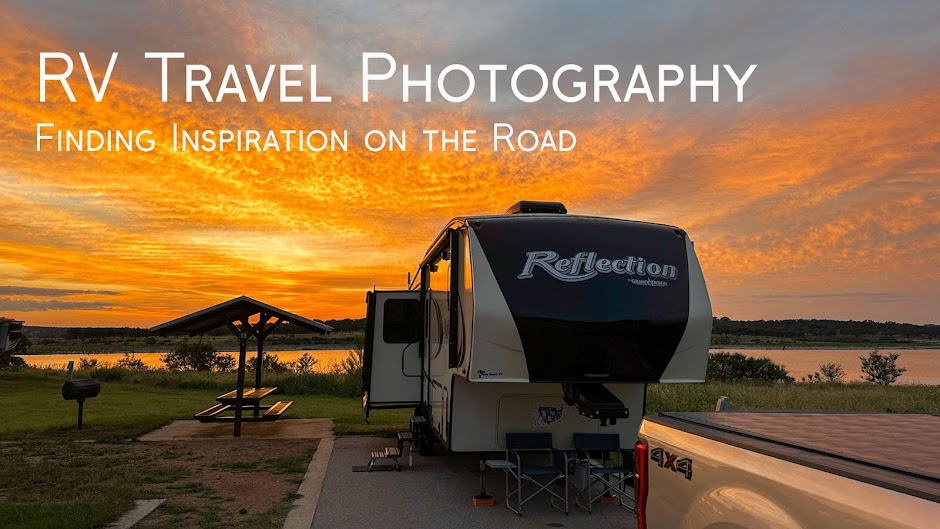

During our first year of traveling in the RV, we parked an entire month at a campground not far from the Jordan River Valley in Michigan’s northern lower peninsula. Thirty years had passed since I had been to the valley, yet it felt so familiar. No longer the young woman who was attracted to wilderness simply for the freedom of driving on remote back roads, my attention was now drawn to the challenge of photographing the Jordan River, the state’s first National Wild and Scenic River.
 |
| Driving into the Jordan River Valley. |
The Jordan is fast flowing for 25 miles and despite its
short distance, it is an amazingly wild river surrounded by 18,000 acres of protected
land within the Mackinaw State Forest. Its clear water is rarely more than 3-4
feet deep as it winds through a deep valley forest of mixed northern hardwoods
– balsam firs, birches, and cedars.

Currents and ripples define the river’s fast flow over the
sandy bottom where downed trees leftover from the logging days are thrown about like pick-up sticks, and in parts are numerous enough to
allow you to cross the river without getting wet. Those logs challenged me to
walk on the Jordan River back in the day, now the challenge was to do the same,
but with camera and tripod in hand.

The river runs through the valley without abruptly changing elevation – thus, no waterfalls. And there are no big rocks to create a waterfall-like effect. Instead, the shallow water moves swiftly around logs laying on the bottom or randomly on top of each other. It’s a tumultuous scene but with the right light appears like a magical forest filled with gold and green tones, and on occasion colorful wildflowers.

Like a swamp, the Jordan Valley is full of earthly chaos
making it a challenge to create an orderly composition. For these difficult
scenes, I look for two important elements – a discernable foreground and an
opening to lead the viewer into the scene. In the image below, the leaning
cedar in the foreground worked nicely as it helped me achieve both objectives.
The soft wispy ferns and grasses gracefully surrounded the exfoliating bark of
the cedar provided a textured foreground of green and yellow tones. This was so
lovely as it framed the water and its deadfall.

A slow shutter speed (1.6 sec) softened the water; yet not
slow enough to remove the ripples created by its many barriers. The water’s
smoothness provided a simplicity of space to serve as a focal point surrounded
by a complicated forest. Some cloud cover was perfect for this scene, bright
enough to light up the water yet muted to avoid harsh contrasts.

The chaotic and wild beauty of this place attracts a
photographer – at the very least (or maybe at the most), for the freedom of
driving on a remote back road to get there.
“Where to next?” she asked.
